

Body recomposition means losing body fat and gaining (or at least keeping) muscle during the same stretch of time, so your body changes shape even when the scale barely moves. It is realistic for many people, especially if you are new to lifting, returning after a break, or carrying extra body fat. It is slower and less dramatic than social media suggests, and the best-supported recipe is not complicated: a small calorie deficit or maintenance-level eating, enough protein, progressive resistance training, regular walking, and enough sleep.
This guide explains what the research does and does not show, how to set calories and protein with worked examples, how to train, how to track progress when the scale lies to you, and what to do when things stall. It is educational, not personal medical advice, and it makes no promise about how much fat or muscle any one person will change.
Key Takeaways
The short answer
What works, in one paragraph
Muscle grows when you challenge it with progressively harder resistance training and give it enough protein and rest. Fat comes off when you eat a little less energy than you use. Doing both at once is possible, but a calorie deficit makes building muscle harder, so the deficit needs to be modest. In randomized trials, people who combined resistance training with a calorie-controlled, higher-protein diet kept more lean mass than dieters who did not lift, and in some studies they gained lean mass while losing fat. Those results are strongest in beginners and in people with extra body fat, and they come from specific trials with specific limits, which this guide spells out.
The five levers, ranked by how much they matter
- Progressive resistance training two to four days a week. This is the signal that tells your body to hold on to or build muscle.
- A small energy deficit (or maintenance calories if you are lean or very new to lifting). Aggressive dieting is the fastest way to lose the muscle you are trying to keep.
- Protein spread across the day. The 2025-2030 Dietary Guidelines for Americans list 1.2 to 1.6 grams per kilogram of body weight per day.
- Sleep and recovery. In one small crossover trial, cutting sleep to 5.5 hours shifted weight loss away from fat and toward lean tissue.
- Daily movement (walking, steps, taking the stairs) to widen the deficit without adding punishing workouts.
Your starting-point decision
Which approach fits you
- New to lifting, or returning after a long break, with extra body fat: a small deficit plus lifting plus protein is a solid starting point. Recomposition is most likely here.
- Lean and experienced: expect recomposition to be slow. Many people in this group do better with focused phases of gaining and losing rather than trying to do both at once.
- Older adult: protecting muscle is a major reason to lift while losing weight. Check in with your clinician first if you have heart disease, diabetes, osteoporosis, joint problems or take medications that affect your weight or blood pressure.
- Pregnant, postpartum or breastfeeding, a teenager, or someone with a history of an eating disorder: do not use this guide to set a calorie deficit. Work with a clinician or registered dietitian.
What to expect, honestly
There is no magic bullet here. Visible change usually takes weeks to months. Strength numbers in your workout log tend to rise before your mirror or your scale shows anything. If you want the broader weight-loss framework this guide plugs into, start with our complete guide on how to lose weight safely.
Body Recomposition Explained: Can You Really Lose Fat and Build Muscle at the Same Time?
What body recomposition means and why the scale can mislead
A working definition
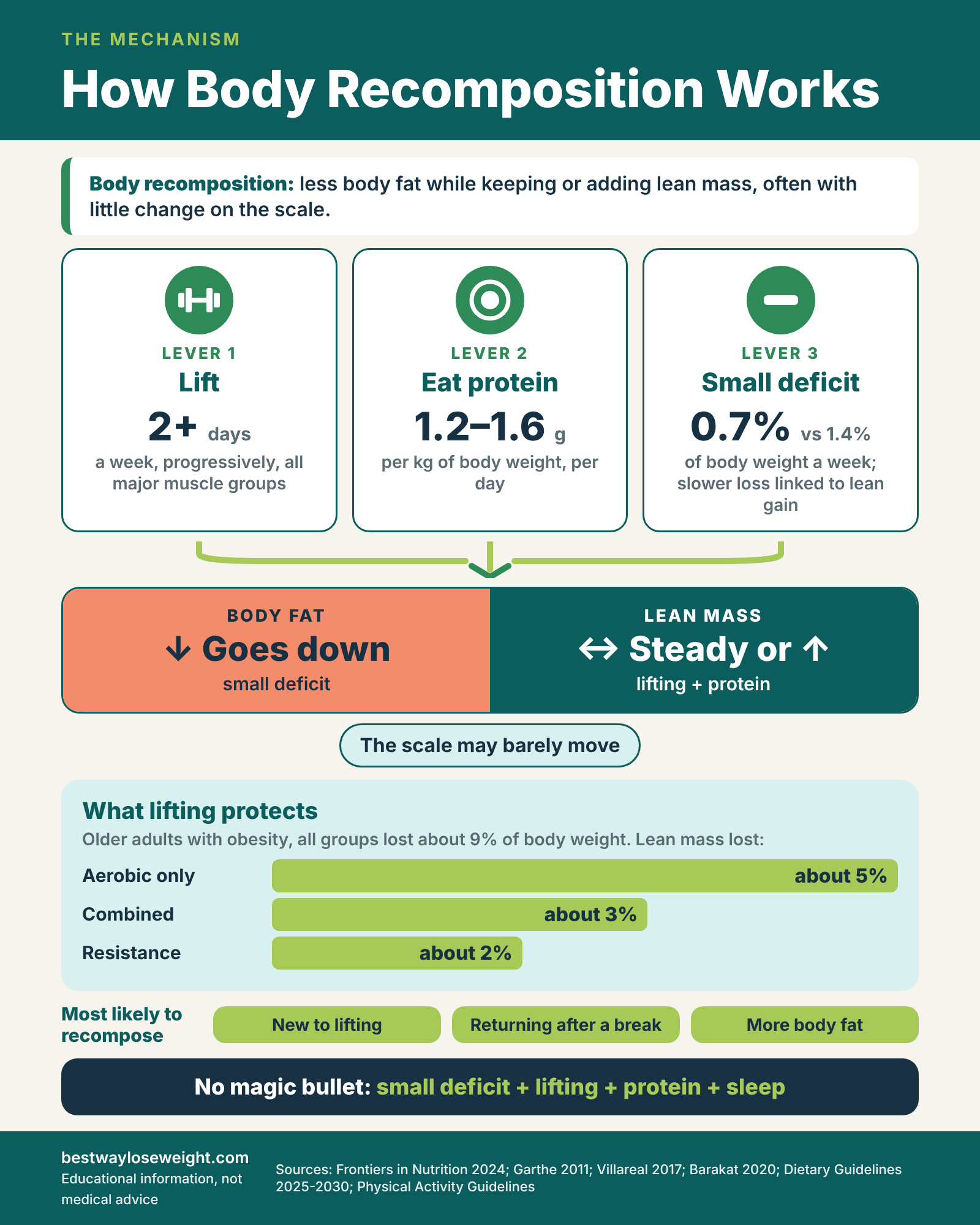
A 2024 editorial in Frontiers in Nutrition defines body recomposition as the simultaneous process of reducing body fat while maintaining or increasing lean mass, frequently with no change in total body mass. Lean mass (sometimes called fat-free mass) is everything in your body that is not fat: muscle, organs, bone, and the water stored in them. Body composition is simply the split between fat and lean tissue. Two people can weigh the same and look very different because their body composition differs.
That is the reason the phrase “lose weight” and the phrase “lose fat” are not interchangeable. When you lose 10 pounds on a very low-calorie diet with no exercise, a meaningful part of those 10 pounds can be lean tissue. When you lose 10 pounds while lifting and eating enough protein, a larger share tends to be fat. The scale reports the sum and cannot tell you which one you lost.
Why a pound of muscle and a pound of fat look different
A pound of muscle and a pound of fat weigh the same, but fat takes up considerably more space. Cleveland Clinic describes it this way: a pound of fat has a much larger volume, while a pound of muscle appears leaner and more toned. That is why some people drop a pants size without losing much weight. It is also why a stable scale during a recomposition phase is not a sign that nothing is happening. Later in this guide you will see which measurements to use instead.
What the research shows
Controlled trials that found fat loss and lean gain together
Three trials come up again and again in this conversation, and each one has limits worth knowing.
- Longland and colleagues (2016, American Journal of Clinical Nutrition). Forty young men ate roughly 40% below their estimated energy needs for four weeks while doing resistance training and high-intensity interval training six days a week. One group ate 2.4 grams of protein per kilogram of body weight per day and the other ate 1.2. The higher-protein group gained about 1.2 kg (about 2.6 pounds) of lean mass and lost about 4.8 kg of fat, while the lower-protein group gained about 0.1 kg of lean mass and lost about 3.5 kg of fat.
- Josse and colleagues (2011, Journal of Nutrition). In overweight and obese premenopausal women who followed a four-month diet and exercise program (aerobic exercise five days a week and circuit weight training two days a week), the group eating more protein and dairy foods gained roughly 1.5 pounds of lean mass while the low-dairy, lower-protein group lost roughly 1.5 pounds, as summarized in a ScienceDaily news release about the study. Total weight loss was similar across the groups.
- Villareal and colleagues (2017, New England Journal of Medicine). In a six-month trial of 160 older adults (65 and over) with obesity and mild-to-moderate frailty, all three exercise groups lost about 9% of body weight, and lean mass fell about 5% in the aerobic-only group, about 3% in the combined group and about 2% in the resistance-training group. Nobody gained a lot of muscle, but adding lifting protected much of what was there.
How to read these results without overreading them
The Longland trial is the most dramatic and the least like the real world: young men, a deep deficit, six days of training a week, and carefully controlled food, for only four weeks. Do not use it as a template. It shows that recomposition is physiologically possible even in a large deficit when training and protein are both high. It does not show that you will gain 2.6 pounds of muscle in a month. The Josse trial combined several changes at once (more protein, more dairy, exercise), so it cannot tell you which one mattered. The Villareal trial is a reminder that for older adults the realistic goal is often keeping muscle, which is a win in its own right.
What the larger reviews say
Reviews of trials and meta-analyses
Individual trials are small, so reviewers pool them. Here is what the larger analyses add:
- Barakat and colleagues (2020, Strength and Conditioning Journal) reviewed the topic and concluded that recomposition is not limited to novices or people with overweight; it has also been documented in resistance-trained people. They point to progressive resistance training and evidence-based nutrition as the key factors, and they discuss sleep, hormones and the limits of body-composition assessment.
- Murphy and Koehler (2022, Scandinavian Journal of Medicine & Science in Sports) pooled studies of resistance training done in an energy deficit versus at maintenance or surplus. As summarized in secondary sources, a calorie deficit reduced gains in lean mass, but it did not clearly reduce strength gains in the mostly beginner participants, and the lean-mass penalty was small or non-significant when the daily deficit was around 500 kilocalories or less. Nearly all the studies recruited beginners, and the one study of experienced lifters did show impaired strength gains.
- Xie and colleagues (2025, Frontiers in Nutrition) ran a network meta-analysis of 62 randomized trials with 4,429 participants and concluded that combining low- or moderate-intensity resistance or aerobic exercise with calorie restriction supports fat loss while preserving lean mass. The authors list small sample sizes, differing diet protocols and little long-term follow-up as limits.
- Cava and colleagues (2017, Advances in Nutrition) point out that in people with obesity, fat-free mass accounts for roughly 20 to 30% of the weight lost during dieting, and that resistance exercise is an effective strategy to blunt or prevent that loss. Higher protein helped preserve a modest amount (a meta-analysis cited there found about 400 to 800 grams), but did not by itself improve muscle strength.
The honest summary of the evidence
Put together, the evidence supports three practical statements. First, lifting during weight loss reliably protects lean mass compared with dieting alone. Second, actually adding muscle while in a deficit happens most often in beginners, people returning to training, and people with higher body fat, and it tends to be small. Third, the further you push the deficit, the more you pay for it in muscle. That is why the next section on energy intake matters so much. For the wider context on how lifting fits into losing weight, see our beginner guide to strength training for weight loss.
Who is most likely to recompose
Groups that tend to respond well
Three groups have the clearest path. People who have never lifted have the most room to improve, and their muscles respond quickly to a new stimulus. People returning to lifting after a layoff often regain lost muscle faster than they built it the first time. And people with more body fat have energy stored that they can draw on while the muscle-building signal stays on. These are tendencies from trials and reviews, not guarantees, and individual response varies a lot.
Groups that should set slower expectations
Lean, well-trained lifters are closer to their genetic ceiling for muscle, so building more is slow, and a deficit makes it slower still. Barakat and colleagues note that recomposition is possible in trained people, but they describe it as a gradual process. If that describes you, a patient approach (small deficit, high-quality training, long timeline) beats chasing both goals aggressively. The table below sums up how likely recomposition is for different starting points.
| Starting point | Chance of losing fat and gaining muscle together | What is a reasonable goal? | Main caution |
|---|---|---|---|
| Brand-new lifter, higher body fat | Highest of the groups listed | Lose fat steadily, build some muscle, and watch strength rise | Starting too hard causes soreness and dropouts; ramp up over several weeks |
| Returning lifter after a long break | High, because lost muscle is regained relatively quickly | Rebuild previous strength while trimming fat | Old numbers are not today’s numbers; start lighter than you remember |
| Intermediate lifter, moderate body fat | Moderate | Maintain or slightly build muscle in a small deficit | Larger deficits cost muscle and training quality |
| Lean, experienced lifter | Low and slow | Hold muscle while trimming a little fat, or use separate phases | Easy to lose performance and recovery by cutting too hard |
| Older adult | Varies; protecting muscle is the realistic target | Keep lean mass and function while losing fat | Needs adequate protein; check with a clinician about conditions and medications |
| Very low-calorie dieter | Poor: large deficits make muscle gain unlikely | Not a recomposition situation; under clinician supervision only | Higher risk of lean-mass and nutrient losses |
How Many Calories for Body Recomposition? Setting a Small Deficit or Maintenance
Why a small deficit beats a crash diet
What the rate-of-loss studies suggest
The most useful single idea in recomposition is that the size of the calorie deficit changes what you lose. A calorie deficit (eating less energy than your body uses) is what drives fat loss, but the bigger it is, the more it interferes with recovery, training quality and muscle retention.
Garthe and colleagues (2011, International Journal of Sport Nutrition and Exercise Metabolism) compared two weight-loss speeds in 24 elite athletes who kept doing resistance training: a slower loss of about 0.7% of body weight per week and a faster loss of about 1.4% per week. The slower group gained about 2% in lean mass and improved strength, while the faster group’s lean mass was essentially unchanged. A later review of natural bodybuilding contest preparation by Helms and colleagues (2014, Journal of the International Society of Sports Nutrition) recommended roughly 0.5 to 1% of body weight per week to maximize muscle retention. Both sources involve athletes who were already lean, so the numbers are not a prescription for the general public, but the direction (slower is kinder to muscle) is consistent.
For general weight loss, the CDC notes that people who lose weight at a gradual, steady pace of about 1 to 2 pounds a week are more likely to keep the weight off than people who lose it faster. For someone doing recomposition, the practical target is usually at the gentle end of that range or below it, especially in the first couple of months while you are learning the training and your body is building new muscle.
Why muscle gain gets harder as the deficit grows
Building muscle costs energy and raw materials. When you eat well below what you burn, your body has less to work with, and recovery between sessions suffers. The Murphy and Koehler analysis found that energy deficits reduced lean-mass gains from resistance training, with small deficits (about 500 kilocalories a day or less) showing little measurable penalty in the pooled data. The same analysis found strength gains held up better than muscle size in a deficit, mostly in beginners. In plain terms: strength is a good early warning light. If your strength is steadily climbing in a deficit, you are probably keeping your muscle. If it keeps sliding, the deficit is probably too big, your sleep or protein is short, or you are recovering poorly.
If you want the full mechanics of how a deficit works for weight loss in general, see our explainer on the calorie deficit.
Worked example: estimating your calorie target
The formula and its assumptions
No online calculator, wearable or equation knows your true calorie needs. They produce estimates, and you correct them with real-world results over a few weeks. A common starting point is the Mifflin-St Jeor equation (Mifflin and colleagues, 1990, American Journal of Clinical Nutrition), which estimates resting energy expenditure, the calories your body uses at rest:
- Women: (10 × weight in kg) + (6.25 × height in cm) − (5 × age in years) − 161
- Men: (10 × weight in kg) + (6.25 × height in cm) − (5 × age in years) + 5
To convert, divide pounds by 2.2 for kilograms and multiply inches by 2.54 for centimeters. Then multiply the result by an activity factor to estimate your total daily energy expenditure (TDEE). The factors most calculators use are conventions rather than precise measurements: roughly 1.2 for little exercise, about 1.375 for light activity (one to three workouts a week), and about 1.55 for moderate activity (three to five workouts a week). If you are unsure, choose the lower factor. Our TDEE calculator guide walks through the idea in more detail.
Two worked examples
Both examples are illustrations of the arithmetic, not recommendations for any real person. The deficit percentages are coaching conventions for a “small” deficit rather than numbers from a specific trial.
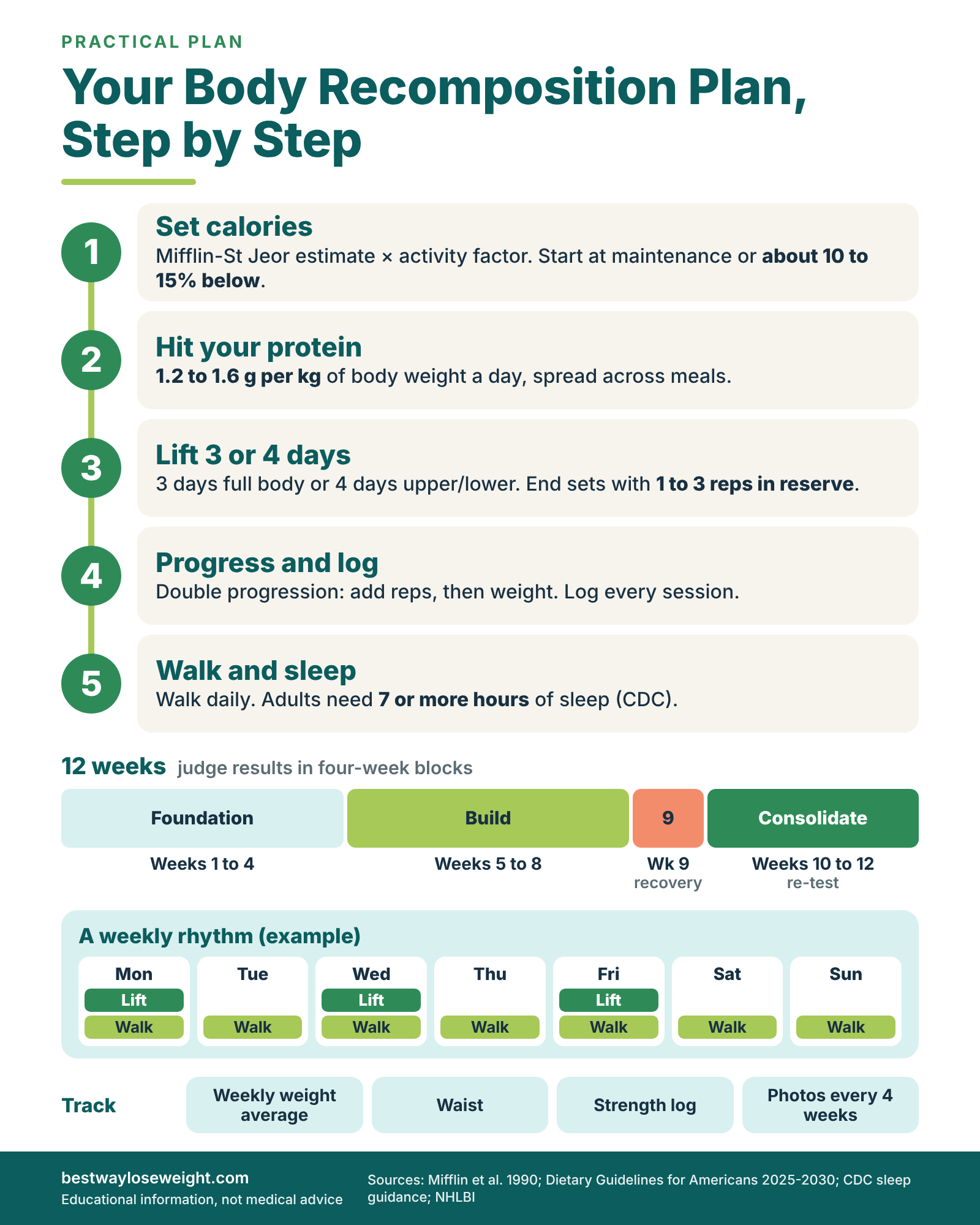
- Person A: a 38-year-old woman, 5 feet 6 inches (about 168 cm), 175 pounds (about 79 kg), lifting three days a week with some walking. Resting estimate: (10 × 79.4) + (6.25 × 167.6) − (5 × 38) − 161 ≈ 1,490 kcal. Using a 1.375 activity factor gives roughly 2,050 kcal for maintenance. A 10 to 15% deficit is about 200 to 300 kcal, so her working range is roughly 1,750 to 1,850 kcal a day.
- Person B: a 45-year-old man, 5 feet 10 inches (about 178 cm), 225 pounds (about 102 kg), lifting three days a week. Resting estimate: (10 × 102.1) + (6.25 × 177.8) − (5 × 45) + 5 ≈ 1,910 kcal. At 1.375, maintenance is roughly 2,630 kcal. A 10 to 15% deficit is about 260 to 395 kcal, giving a working range near 2,250 to 2,350 kcal a day.
| Step | Person A (woman, 38) | Person B (man, 45) |
|---|---|---|
| Weight and height | 175 lb (79.4 kg); 66 in (167.6 cm) | 225 lb (102.1 kg); 70 in (177.8 cm) |
| Mifflin-St Jeor resting estimate | about 1,490 kcal | about 1,910 kcal |
| Activity factor used (light, 1.375) | about 2,050 kcal maintenance | about 2,630 kcal maintenance |
| Small deficit (10 to 15%) | about 1,750 to 1,850 kcal | about 2,250 to 2,350 kcal |
| Gentle weekly rate (0.5% of body weight) | about 0.9 lb per week | about 1.1 lb per week |
| Protein at 1.2 to 1.6 g/kg | about 95 to 127 g a day | about 122 to 163 g a day |
A note on the floor: these numbers are well above the intake levels that clinicians consider very-low-calorie diets. Very-low-calorie approaches belong under medical supervision, and they are not recomposition plans. If your estimated target ever comes out far below what you usually eat, or you feel dizzy, cold, exhausted or preoccupied with food, step back and ask a clinician or registered dietitian for help.
Choosing your calorie strategy
A decision framework
Use this if-then logic to pick a starting point, then dial it in after three to four weeks of real data.
- If you are new to lifting and have extra body fat: start with a small deficit (about 10 to 15% below your estimated maintenance). Your body has fuel in reserve and a strong response to training.
- If you are lean, experienced or have been dieting for a long time: start at maintenance and let strength and measurements lead. A deficit may be better saved for a short, focused phase later.
- If you lift more than four days a week or do a lot of cardio: keep the deficit smaller, because recovery is already taxed.
- If sleep is short or life is stressful: sit at maintenance for now. Fix the recovery side first (see the sleep section below).
- If you take medications or have a medical condition that affects appetite or weight: your prescriber should be part of the plan, including calorie targets.
Training-day and rest-day calories
Some programs eat a bit more on training days and a bit less on rest days, a pattern sometimes called calorie cycling. Cleveland Clinic describes this as a common approach in body recomposition. The research on whether cycling beats a steady daily intake is thin, so treat it as a preference rather than a requirement. What matters more is the weekly average. If cycling helps you feel fueled for workouts and calmer on rest days, it is fine. If it makes the plan complicated, drop it and eat roughly the same amount each day.
Protein, Carbs and Fats for Body Recomposition
How much protein you need
What guidelines and trials say
Protein is the nutrient your body uses to repair and build muscle, and when you are in a calorie deficit it matters more than usual. The 2025-2030 Dietary Guidelines for Americans list a protein goal of 1.2 to 1.6 grams per kilogram of body weight per day. That is higher than the long-standing Recommended Dietary Allowance of 0.8 grams per kilogram, which was set as a minimum to prevent deficiency rather than as a target for people who lift and diet.
Several lines of research point to the same range. A meta-analysis by Morton and colleagues (2018, British Journal of Sports Medicine) pooled 49 randomized trials with 1,863 participants and found that protein supplementation during resistance training modestly increased lean mass, with benefits leveling off at about 1.6 grams per kilogram per day. The Longland trial described earlier used 2.4 grams per kilogram in a severe deficit with very high training volume, and it did better than 1.2. Cava and colleagues caution that extra protein preserves only a modest amount of lean mass and does not replace training. Cleveland Clinic gives an example of 110 to 150 grams a day for a 165-pound person, which is about 1.5 to 2.0 grams per kilogram and runs a bit above the Dietary Guidelines range.
The takeaway is that ranges differ by source, the evidence for going much above about 1.6 g/kg is weaker for most people, and a practical starting range for recomposition is 1.2 to 1.6 grams per kilogram per day, moving toward the upper half when you are lifting hard, eating in a deficit, or older. For a longer look at protein for weight loss, see our guide on how much protein you need to lose weight.
Worked protein examples
To find your range, convert your weight to kilograms (pounds divided by 2.2), then multiply by 1.2 and 1.6. If you have a lot of body fat to lose, some clinicians and dietitians calculate from a reasonable goal weight instead of current weight, which keeps the number from getting unnecessarily high. That is a practical convention, not a rule from the Dietary Guidelines, so ask a dietitian if you are unsure.
| Body weight | In kilograms | Lower end (1.2 g/kg) | Upper end (1.6 g/kg) |
|---|---|---|---|
| 130 lb | 59 kg | 71 g | 94 g |
| 150 lb | 68 kg | 82 g | 109 g |
| 175 lb | 79 kg | 95 g | 127 g |
| 200 lb | 91 kg | 109 g | 145 g |
| 225 lb | 102 kg | 122 g | 163 g |
| 250 lb | 113 kg | 136 g | 182 g |
Spreading protein across the day and choosing foods
A simple per-meal pattern
Muscle responds to protein throughout the day, and most people find it easier to hit a target by building it into every meal. A common coaching pattern is three or four eating occasions with a palm-sized or larger portion of protein each, roughly 25 to 40 grams per meal for most adults. That figure is a practical convention rather than a precise threshold from the trials above. If your day has three meals and one snack, a 150-pound person aiming for about 100 grams could eat 25 grams at each of four occasions.
The amounts below are approximate; check the labels on your own foods, because brands vary.
- 3 ounces cooked chicken breast: about 25 grams
- 1 cup plain nonfat Greek yogurt: about 20 to 24 grams
- 1 large egg: about 6 grams (three eggs is a decent breakfast base)
- 1/2 cup low-fat cottage cheese: about 12 to 14 grams
- 1 can of tuna: about 20 grams or more
- 1 cup cooked lentils: about 18 grams
- Firm tofu or tempeh, 1/2 cup: about 10 to 17 grams depending on the product
Budget, plant-based and low-appetite options
Protein does not have to be expensive. Eggs, canned fish, dried or canned beans and lentils, plain yogurt, cottage cheese, tofu and frozen chicken or turkey are among the cheaper sources per gram of protein. Plant-based eaters can reach the same range by combining soy foods, beans, lentils and whole grains, and by using a protein powder if whole foods leave a gap. If your appetite is small, liquids such as milk, kefir or a protein shake can help you reach the target without feeling stuffed. High-protein foods also tend to be filling, which helps if you are eating in a deficit.
Carbohydrates, fat, fiber and alcohol
Fueling your training
After protein, the other calories can come from carbohydrate and fat in whatever balance you like. For recomposition, carbohydrate is mostly about training quality: if your workouts feel flat and your strength stalls while you are in a deficit, trimming carbohydrate too far may be part of the reason. There is no single best split. Many people do well putting a larger share of their carbohydrate around training (a meal one to three hours before and a meal afterward), which is a practical convention rather than a requirement. Choose mostly whole-food sources such as oats, potatoes, rice, beans, fruit and whole-grain bread, and keep fiber-rich foods in the mix to stay full.
A fat floor, and what to do about alcohol
Dietary fat supports hormone production and the absorption of vitamins A, D, E and K, so it should not be cut to near zero. A moderate share of calories from olive oil, nuts, seeds, fish and dairy is a sensible baseline. Alcohol is a different story. It provides calories without protein, can disrupt sleep, and tends to loosen food decisions, all of which work against recovery. You do not need to give it up to recompose, but treating it as a calorie line item (and avoiding it around your hardest training days) removes one common source of stalled progress. The Dietary Guidelines list added sugars and highly processed foods as items to limit, which is easier when protein and fiber are already doing the heavy lifting at meals.
Safety checks and supplements
When to check with a clinician before raising protein or cutting calories
A higher-protein pattern is reasonable for many healthy adults, but it is not right for everyone. Talk with your clinician or a registered dietitian first if you have kidney disease or reduced kidney function, if you take medications for diabetes or blood pressure, if you are pregnant or breastfeeding, if you are under 18, or if you have a history of disordered eating. Counting grams and tracking body measurements can become unhelpful or harmful for people with a history of an eating disorder, and nothing in this guide should replace professional support.
Creatine and protein powders
Protein powder is just a convenient food. It is useful if it helps you reach your target, and unnecessary if you already do. Creatine monohydrate is the most studied sports supplement for strength training. The Australian Institute of Sport describes evidence for more repetitions at a given weight, greater strength and more lean body mass, along with no systematic serious adverse effects in healthy people, although some people notice mild stomach upset. It also notes that creatine is associated with extra body water, so scale weight can go up a pound or two and fall again after stopping. That matters here: if you start creatine, expect a small jump on the scale that reflects water, not fat. Anyone with kidney disease, or who takes regular medications, should check with a clinician before using any supplement.
Resistance Training for Body Recomposition: A Practical Weekly Plan
The principles that matter most
What the guidelines and the new ACSM position stand say
The federal Physical Activity Guidelines for Americans and the CDC recommend muscle-strengthening activity that works all the major muscle groups on 2 or more days a week. That is the floor for health. Recomposition usually calls for more deliberate training than the minimum, and the newest professional guidance reflects that. In 2026, the American College of Sports Medicine (ACSM) published an updated position stand on resistance training (Medicine & Science in Sports & Exercise, chaired by Stuart Phillips), built on an overview of more than 137 reviews covering over 30,000 participants. It replaces the 2009 version. Summaries of the new stand describe roughly 10 hard sets per muscle group per week as a good target for building muscle, note that training to failure is not consistently better than stopping a rep or two short, and stress that people can gain strength and muscle across a wide range of loads as long as sets are taken close enough to hard effort.
The practical message is reassuring. You do not need a perfect program. You need a sensible one that you can repeat for months, that covers every major muscle group, and that gets a little harder over time.
Progressive overload and reps in reserve
Progressive overload means gradually asking your muscles to do more over time: a little more weight, an extra rep, an extra set, or a better-controlled movement. Without it, your body has no reason to build or hold on to extra muscle, which is especially important when you are eating less. Reps in reserve (RIR) is a way to gauge effort: it is the number of good repetitions you could still do before you could not complete another. Finishing most sets with about 1 to 3 reps in reserve is hard enough to drive progress and gentle enough to recover from, particularly in a calorie deficit. Reserve training to failure for the last set of a few safe exercises (such as leg press or cable work), not for heavy free-weight lifts you cannot spot yourself on.
For a beginner-focused companion with form cues and home-versus-gym programs, see our beginner guide to strength training for weight loss.
Two weekly templates you can start with
A three-day full-body template
A full-body routine three days a week (for example Monday, Wednesday and Friday) is a strong starting point. It trains each muscle group multiple times a week, spreads the work out, and leaves recovery days in between. Each session takes about 45 to 60 minutes including warm-up. The sets and reps below add up to roughly 8 to 10 hard sets per major muscle group per week, which lines up with the commonly cited target. The exercises are examples, not requirements. Swap in any movement that fits your equipment and joints.
Warm up for 5 to 10 minutes with easy movement (brisk walking, a few body-weight squats, band pull-aparts) and do a lighter set of your first exercise before the working sets. Rest about 1.5 to 3 minutes between hard sets of big lifts and 60 to 90 seconds between smaller exercises. These rest times are coaching conventions that work well for most people.
| Movement pattern | Day 1 | Day 2 | Day 3 |
|---|---|---|---|
| Squat or leg press | Goblet or barbell squat, 3 × 6 to 10 | Leg press, 3 × 8 to 12 | Step-ups or split squat, 3 × 8 to 12 per leg |
| Hip hinge | Romanian deadlift, 2 × 8 to 10 | Hip thrust or glute bridge, 3 × 8 to 12 | Hex-bar or trap-bar deadlift, 3 × 5 to 8 |
| Horizontal push | Dumbbell bench press, 3 × 8 to 12 | Push-ups (or incline push-ups), 3 × 8 to 15 | Incline dumbbell press, 3 × 8 to 12 |
| Vertical push | Seated dumbbell shoulder press, 2 × 8 to 12 | Standing overhead press, 3 × 6 to 10 | Lateral raises, 2 × 12 to 15 |
| Horizontal pull | One-arm dumbbell row, 3 × 8 to 12 | Seated cable or band row, 3 × 10 to 12 | Chest-supported row, 3 × 8 to 12 |
| Vertical pull | Lat pulldown or assisted pull-up, 3 × 8 to 12 | Face pulls, 2 × 12 to 15 | Lat pulldown, 3 × 8 to 12 |
| Core | Plank, 2 × 30 to 45 seconds | Dead bug, 2 × 8 per side | Side plank, 2 × 20 to 30 seconds per side |
A four-day upper/lower template and exercise swaps
If you prefer shorter sessions or want more weekly volume per muscle, an upper/lower split works well: Monday upper, Tuesday lower, Thursday upper, Friday lower. Each session takes about 45 to 60 minutes. Use the same exercise families as the table above, but spend more sets on fewer movements per day. For instance, lower days might be squat (4 sets), Romanian deadlift (3 sets), split squat (3 sets), calf raise (3 sets) and a core move (2 sets), while upper days pair a press and a row (3 to 4 sets each) with a vertical press and pull (3 sets each), plus 2 sets each of biceps and triceps work if you like.
The right swap depends on what you have and what hurts. A few examples:
- No gym: use a pair of adjustable dumbbells, resistance bands and a backpack loaded with books. Goblet squats, Romanian deadlifts, floor presses, push-ups, bent-over rows and suitcase carries cover most patterns.
- Cranky knees: choose box squats to a comfortable depth, step-ups to a low step, or hip-dominant moves like hip thrusts and Romanian deadlifts.
- Sore shoulders: use neutral-grip dumbbells, landmine presses or incline presses, and avoid painful overhead ranges.
- Low back sensitivity: pick supported rows, leg press and glute bridges over heavy hinging until a clinician or physical therapist clears you.
Pain that is sharp, worsening, or that travels or numbs a limb is a reason to stop and get evaluated, not to push through.
Progression, tracking and deloads
How to progress without guessing
The most reliable progression for most people is double progression. Choose a rep range for each exercise (for example 8 to 12). Start with a weight you can lift for 8 reps with 2 reps in reserve. Each session, try to add a rep or two. When you can complete all your sets at the top of the range (12 reps) with good form and a rep or two in reserve, increase the weight by the smallest jump available (often 2.5 to 5 pounds) and drop back to the bottom of the range. Write down every session: exercise, weight, sets and reps. A workout log is the single best tool for knowing whether you are actually progressing, because during a recomposition phase your body weight will not tell you.
Expect progress to slow after the first couple of months. Beginners usually improve nearly every session at first, then every week, then every few weeks. That slowing is normal and not evidence that something is wrong, as long as the trend line over a month is still pointing up.
Weekly volume, recovery weeks and when to back off
More sets are not automatically better, especially in a deficit. If your numbers are rising, you feel recovered by your next session, and your sleep is decent, keep the volume where it is. If numbers stall for two to three weeks, add one set to a lagging muscle group, check your protein and sleep, and wait another two weeks. If numbers fall for two weeks in a row, joints ache, and motivation tanks, take a recovery week: keep your usual days, but cut sets by about a third and use lighter weights. Many people schedule this every 6 to 10 weeks or when they notice the warning signs. Planned recovery weeks keep fatigue from quietly eating into your muscle-building signal.
Cardio, Steps and Daily Movement During Body Recomposition
How much cardio you need
What the guidelines recommend
The federal guidelines recommend 150 to 300 minutes a week of moderate-intensity aerobic activity (or 75 to 150 minutes of vigorous activity) for adults, and the CDC repeats the 150-minute baseline. Cardio matters for heart health, blood pressure, mood and sleep, whether or not you are trying to change your body composition. It also helps a calorie deficit without requiring you to eat even less. The Villareal trial found that adding resistance exercise to a weight-loss program, with or without aerobic exercise, left lean mass losses smaller than aerobic exercise alone, and the combined group improved its physical performance test scores the most (about 21%, versus about 14% for either exercise type alone). The Xie network meta-analysis likewise pointed to combined approaches as a strong option for fat loss with lean-mass retention.
For most people doing recomposition, a sensible mix is two to three resistance sessions plus 90 to 150 minutes a week of easy-to-moderate cardio, mostly walking. You can build toward the full 150 to 300 minutes over time if your recovery allows.
Where to put cardio so it does not undercut your lifting
Heavy cardio competes with lifting for recovery. Three habits help: keep hard leg workouts and hard intervals on separate days where you can; if you must do both in one session, lift first and cardio second; and favor low-impact, low-fatigue options (brisk walking, cycling, incline treadmill walking) on most days. These are practical conventions based on how fatigue accumulates, not hard rules from a single trial. Fatigue from cardio is a common hidden reason strength stalls during a deficit.
Steps and non-exercise activity
Why daily movement is the easiest lever
Non-exercise activity (often shortened to NEAT) is the movement you do outside planned workouts: walking, chores, taking stairs, fidgeting, standing. It is easier to repeat than extra gym sessions and it does not tax the muscles you are trying to build. If you want to widen a deficit without cutting food further, adding a daily walk can move the needle without asking you to eat even less, and it is usually the gentlest option. Our guide on how many steps a day to lose weight covers step targets and how to build them up.
A steady-step approach
Pick a baseline: wear a phone or watch for a normal week and note your average. Then raise the daily average by about 1,000 to 1,500 steps for two weeks and hold it there before changing anything else. Resist the urge to jump from 4,000 to 12,000 steps overnight, because sudden increases in walking can bring sore feet and shins. Keep your step count roughly the same from week to week, because swings in daily activity can distort what you conclude about your calories. If your steps drop on busy weeks, the plan still works. Just notice it and adjust.
Sleep, Stress and Recovery: The Quiet Half of Recomposition
What short sleep does to the fat and muscle you lose
The evidence from a controlled crossover trial
Nedeltcheva and colleagues (2010, Annals of Internal Medicine) studied 10 adults with overweight (3 women and 7 men, average age about 41) who followed a moderate calorie restriction for 14 days under two sleep conditions in a randomized crossover design: 8.5 hours in bed versus 5.5 hours in bed. With the shorter sleep, the share of weight lost as fat dropped by 55% (about 1.4 kg of fat lost versus about 0.6 kg), and fat-free mass loss rose by 60% (about 1.5 kg versus about 2.4 kg). People also reported more hunger. The study was small and short, and the sleep restriction was strict, so it does not show what happens with a few bad nights. It does fit the broader pattern that short sleep makes dieting less efficient and hunger harder to manage.
A realistic sleep target
The CDC says adults aged 18 to 60 need 7 or more hours of sleep per night, and 7 to 9 hours in the early 60s and 7 to 8 hours at 65 and over. If you are lifting and eating in a deficit, treat that range as part of the plan. Practical steps include a consistent wake time, a wind-down routine, a cool, dark bedroom, caffeine earlier in the day and alcohol limited in the evening. For more on how sleep affects hunger and habits, see our article on sleep and weight loss. If you snore heavily, wake unrefreshed or stop breathing at night, ask a clinician about sleep apnea.
Stress, soreness and rest days
Telling normal soreness from a problem
Delayed-onset muscle soreness typically peaks a day or two after a new or harder workout and eases within a few days. It is normal when you start or change a program, and it tends to fade as your body adapts. Soreness is not a measure of workout quality. You can build muscle without being sore. Seek medical care promptly for severe pain with swelling, marked weakness, dark brown or cola-colored urine, chest pain, dizziness, fainting or pain that localizes to a joint after a specific moment of injury.
Rest days, stress and what to do when life gets in the way
Muscle is built during recovery, not during the workout, so rest days are part of the program. On non-lifting days, easy walking, mobility work or a light bike ride is fine. High chronic stress makes everything harder: sleep suffers, appetite and cravings shift, and workouts feel heavier. You cannot eliminate stress, but you can protect the basics. When a week goes sideways, the minimum effective plan is two shorter full-body sessions, protein at each meal and your normal walking. A modest week that you complete is worth more than a perfect week you abandon. A missed workout does not erase progress.
How to Track Body Recomposition Progress When the Scale Barely Moves
Measurements that actually tell you something
Use the scale as a trend, not a verdict
If fat is dropping while muscle is rising, the scale may sit nearly still, so it is the least useful single number in a recomposition plan. It is still useful as one input if you use it correctly. Weigh yourself under the same conditions (after using the bathroom, before eating, same scale) a few mornings a week, then look at the weekly average rather than any one day. Day-to-day swings of a pound or two from water, food volume and, for many women, the menstrual cycle are normal and say nothing about fat. Creatine, a big salty meal or a hard leg day can all add temporary water weight.
Waist, strength, photos and how your clothes fit
Four low-tech measures do most of the work:
- Waist circumference. The National Heart, Lung, and Blood Institute describes how to measure it: stand and place a tape measure around your middle just above your hipbones, and read it just after you breathe out. NHLBI also lists waist sizes above 35 inches for women and above 40 inches for men as marking a higher health risk for heart disease and type 2 diabetes. Measure every two weeks at the same spot.
- Strength log. Rising weights or reps on your main lifts are among the best signs that you are keeping or building muscle in a deficit.
- Photos. Take front, side and back photos every four weeks in the same lighting and clothing. Review them side by side, not daily.
- Clothes and daily life. Cleveland Clinic points to clothes fitting differently and being able to walk farther as practical signs of progress. Carrying groceries more easily or climbing stairs without huffing counts too.
Body-composition devices and their limits
DEXA, bioimpedance scales and calipers
Several tools claim to measure body fat and lean mass. Cleveland Clinic lists DEXA scans, MRI, bioelectrical impedance, waist circumference and skinfold calipers as ways to assess body composition. A DEXA scan (dual-energy X-ray absorptiometry) uses low-dose X-rays to estimate fat, lean tissue and bone, and it is often treated as a reference method in studies, though it is not perfect and is not widely available at low cost. Bioelectrical impedance (BIA) sends a small electrical current through the body and estimates fat and lean mass from how the body resists it; this is the technology in most smart scales and handheld devices. Because the current travels through water, BIA readings depend on how hydrated you are, whether you have recently eaten or exercised, and the device and its equations. The 2024 Frontiers in Nutrition editorial on recomposition notes that some bioimpedance devices showed good accuracy for estimating total body water in the specific population studied, but validity can vary across devices and groups.
How to use them without being misled
If you use a device, treat it as a trend tool. Test under the same conditions each time (same time of day, hydrated but not just after a big drink, no hard workout in the prior 12 to 24 hours), and focus on the direction over several months rather than any single reading. Do not compare readings between devices. Errors of a few percentage points are common, so a one-point change is noise. If a number makes you anxious or sends you chasing food rules, skip the device entirely. Cleveland Clinic cites American Council on Exercise ranges of roughly 14 to 24% body fat for men and 21 to 31% for women as typical healthy ranges, but being lean does not guarantee good health, and body composition is just one marker among many.
| Measure | What it tells you | How often | Main limit |
|---|---|---|---|
| Body weight (weekly average) | Whether total mass is trending up, down or flat | Several mornings a week; judge by 2 to 4 week trend | Cannot separate fat, muscle and water |
| Waist circumference | Direction of abdominal fat and health risk threshold | Every 2 weeks | Affected by bloating, posture and measuring spot |
| Strength log (key lifts) | Whether you are keeping or building muscle and neural skill | Every session; review monthly | Early gains are partly learning; sleep and fatigue shift numbers |
| Photos | Visual change in shape and proportions | Every 4 weeks | Lighting, posture and pump change appearance |
| Clothes fit and daily function | Real-world impact | Ongoing | Subjective; shrinkage and style changes confuse it |
| BIA smart scale | Rough trend in fat and lean estimates | Weekly or monthly, same conditions | Sensitive to hydration; errors of several percentage points are common |
| DEXA scan | Regional fat, lean and bone estimates | Every 3 to 6 months at most | Cost, access, small radiation dose, and errors still exist |
Decision rules from your own data
How to interpret four weeks of numbers
Give any new plan four weeks before judging it, because the first one to two weeks are mostly water and food-volume changes. Then look at the combined picture. If your waist is down a bit or flat, your strength is up, and your weekly weight average is flat or slightly down, you are recomposing, and the plan is working. If weight is down at a gentle pace and strength is steady, you are losing fat and holding muscle, which is also a win. If weight is dropping fast and strength is falling, the deficit is probably too big. If weight is up, waist is up and strength is flat, you are eating too much for your goal, so trim 100 to 200 kcal and recheck in two to three weeks.
Make one change at a time
The most common reason people cannot tell what works is that they change everything at once. When you adjust, change one lever (calories, steps, training volume or sleep routine), hold it for two to four weeks and read the results. If you are consistently doing the plan and the scale still will not budge over a month or more, our guide to the weight loss plateau walks through diagnosing it.
A 12-Week Body Recomposition Plan, Week by Week
The three phases
Weeks 1 to 4: foundation
The aim of the first month is to build habits you can stick with and learn the lifts, not to hit exact numbers. Start with three full-body sessions at easy-to-moderate effort (about 3 reps in reserve), get into the habit of hitting your protein range on most days, and set your calories at maintenance or a very small deficit. Track your baseline: weekly weight average, waist, a photo, and your starting weights. Walk daily. Do not add extras. If your sleep is short, make that your first project.
Weeks 5 to 8: build
By now, the movements should feel familiar. Push each set a bit harder (1 to 2 reps in reserve on most sets), add a set to any lagging body part, and move calories to the small-deficit range if you started at maintenance and fat loss is your priority. Increase your daily steps by about 1,000 over your baseline. Review your numbers at the end of week 4 and week 8 using the decision rules above.
Weeks 9 to 12: consolidate and decide
Week 9 is a lighter recovery week. In weeks 10 and 11, return to your full routine, pushing the weights on your main lifts where form allows. In week 12, re-test: compare your starting numbers with your current ones and decide what comes next. If you lost fat and held or built strength, continue another cycle. If you are tired and stalled, hold at maintenance for two to four weeks before another deficit phase. A rest from dieting is a legitimate part of the process, not a failure.
| Phase | Training | Calories and protein | Daily movement and recovery | Checkpoint |
|---|---|---|---|---|
| Weeks 1 to 4: foundation | 3 full-body days, about 3 reps in reserve, learn the lifts | Maintenance or a very small deficit; protein 1.2 to 1.6 g/kg | Daily walking at your baseline; aim for 7 or more hours of sleep | Record baseline weight average, waist, photos and starting weights |
| Weeks 5 to 8: build | 3 or 4 days, 1 to 2 reps in reserve, add a set where lagging | Small deficit (about 10 to 15%) if fat loss is the priority | Add about 1,000 steps a day | Review at end of week 8 using the decision rules |
| Week 9: recovery week | Cut sets by about a third; lighter weights | Hold calories; keep protein | Easy walks and mobility | Check sleep, soreness and motivation |
| Weeks 10 to 12: consolidate | Push main lifts, then re-test strength | Same as weeks 5 to 8 | Maintain steps | Compare with baseline; choose another cycle, maintenance or a pause |
A sample week and a sample day of eating
A sample training week
- Monday: full-body lifting, Day 1 (about 50 minutes)
- Tuesday: 30-minute brisk walk or easy bike ride
- Wednesday: full-body lifting, Day 2
- Thursday: walk plus 10 minutes of mobility work
- Friday: full-body lifting, Day 3
- Saturday: longer easy outing, such as a hike or a family bike ride
- Sunday: rest day, plus planning and grocery shopping
A sample day of eating
This sample is built around Person A from earlier (about 1,750 kcal and a protein range near 95 to 127 grams). Portions and values are approximate, and you can swap similar foods freely.
- Breakfast: three eggs scrambled in 1 teaspoon of olive oil with spinach, plus an orange (about 320 kcal, 20 g protein).
- Lunch: 3 ounces grilled chicken over mixed greens with 1 cup cooked quinoa and a tablespoon of olive oil dressing (about 530 kcal, 37 g protein).
- Snack: 1 cup plain nonfat Greek yogurt with 1/2 cup blueberries (about 170 kcal, 23 g protein).
- Dinner: 5 ounces cooked salmon, one medium baked potato, and 1.5 cups roasted broccoli with a teaspoon of oil (about 520 kcal, 38 g protein).
- Evening snack: an apple with 1 tablespoon peanut butter (about 190 kcal, 4 g protein).
The day totals roughly 1,730 kcal and 120 grams of protein. On a lifting day, you could add a slice of whole-grain toast with breakfast or extra rice with dinner. On a rest day, you might leave out the peanut butter snack. Prep proteins in bulk on Sunday (a tray of baked chicken thighs, a pot of lentils, hard-boiled eggs) so that hitting your number takes assembly, not decisions.
Troubleshooting Body Recomposition and Special Situations
If this, then that: fixing common stalls
A troubleshooting table
Most stalls trace back to one of a handful of causes. Work through the table from top to bottom, change one thing, and give it two to four weeks.
| If this is happening | The likely cause | Try this first |
|---|---|---|
| Strength is flat for 3 or more weeks | Not enough challenge, too little recovery or too little food | Add a rep or small weight jump; check sleep; move to maintenance calories for 2 weeks |
| Strength is falling and weight is dropping fast | Deficit too large or poor sleep | Add 150 to 250 kcal a day; confirm protein; take a recovery week |
| Weight and waist are rising, strength flat | Eating above maintenance, or tracking is off | Check portions and weekend eating; trim 100 to 200 kcal; recheck in 2 to 3 weeks |
| Weight is steady, waist is steady, strength is steady | You may be at maintenance with a balanced routine | Hold the plan for 4 more weeks, then trim 100 to 150 kcal or add 1,000 steps |
| Weight jumped 2 to 4 pounds in a week | Water from salt, creatine, a new program or the menstrual cycle | Wait 7 to 10 days and look at the average; do not slash calories |
| Workouts feel heavy and appetite is huge | Under-recovery or too aggressive a deficit | Raise calories toward maintenance; protect sleep; lower session volume for a week |
| Hunger is hard to manage at your target | Low protein or fiber, low sleep or deficit too deep | Add protein at each meal, add vegetables and beans, review sleep, narrow the deficit |
| Joint pain on certain lifts | Exercise selection, technique or load jump | Swap the movement, lower the load, and see a clinician or physical therapist if it persists |
Common mistakes to avoid
Patterns that quietly sink recomposition attempts include cutting calories too far too fast, under-eating protein, changing programs every two weeks so that nothing ever progresses, doing so much cardio that lifting suffers, judging progress by the scale alone, skipping sleep to fit in workouts, and treating one off-plan meal as a reason to quit the week. None of these is a moral failing. They are design problems, and each has a straightforward fix from the table above.
Special situations
Older adults and midlife
For adults over 65, the Villareal trial showed the value of pairing weight loss with exercise: those who lifted, especially in combination with aerobic exercise, lost less lean mass and improved physical performance more than those who did aerobic exercise alone. Muscle supports balance, bone loading and independence, so protecting it is often the main goal in this stage of life. Adequate protein matters, and the Dietary Guidelines note that some older adults need fewer calories but still need equal or greater amounts of nutrients such as protein. Check with a clinician about heart disease, osteoporosis, diabetes, kidney function and medications before starting a new program.
Women, hormones, pregnancy and postpartum
Many women notice scale changes across the menstrual cycle that come from fluid shifts, not fat, which is another reason to use weekly averages and non-scale measures. Lifting will not make most women look bulky, because building large amounts of muscle takes years of focused training and surplus eating. During pregnancy and the postpartum and breastfeeding periods, energy needs change and a calorie deficit is not the right default. Talk with your obstetric clinician or a registered dietitian first. If you are in perimenopause or menopause, the same principles apply, but sleep disruption and shifting appetite can make recovery and consistency harder, so be patient with the timeline.
People taking GLP-1 or other weight-management medications
Medications that reduce appetite can make it hard to eat enough protein, and weight lost on them can include lean mass, which makes resistance training and a protein-focused food plan especially relevant. Decisions about calories, protein targets and exercise while on these medications should be made with your prescriber or a registered dietitian, who knows your dose, side effects and health history. Do not change a prescription on the basis of an article. For the medication side, see our patient-friendly guide to GLP-1 medications for weight loss.
Busy schedules, injuries and limited budgets
If your time is tight, two 40-minute full-body sessions plus daily walking still provide a real stimulus. If an injury limits one area, train around it: an arm in a sling does not stop you from doing leg work. If money is tight, a pair of adjustable dumbbells, a set of bands, a pull-up bar and a few staple proteins (eggs, beans, canned fish, yogurt, frozen chicken) are enough. None of this requires a gym membership or special foods.
Frequently Asked Questions About Body Recomposition
Timing and expectations
How long does it take to see body recomposition results?
Strength usually improves within the first few weeks. Measurable changes in waist or photos tend to take several weeks to a few months, and visible muscle definition takes longer. Cleveland Clinic notes that effects may take weeks to months to become noticeable. Judge your plan in four-week blocks rather than daily.
Why did my weight go up when I started lifting?
Early weight gains are often water. Muscles store carbohydrate with water, new training causes mild inflammation, and creatine or a higher-carbohydrate day can add more. This typically settles after a few weeks. Check your waist and strength log before concluding you are gaining fat.
Is it better to bulk and then cut instead?
It depends on your starting point. For beginners and people with extra body fat, recomposition is often efficient and simpler. For lean, experienced lifters, separate phases of surplus and deficit may make more sense because gaining muscle in a deficit is slow. The evidence does not show one approach is best for everyone, so choose the one you can sustain without chasing the scale.
Food and supplements
Do I need to count calories and macros?
Not necessarily. Counting provides data, but some people do well with a simpler approach: a protein serving at every meal, plenty of vegetables and fruit, planned portions of carbohydrate and fat, and a weekly check on trends. If tracking triggers anxiety or obsessive habits, or you have a history of disordered eating, skip it and work with a professional.
Does intermittent fasting help with recomposition?
The research on fasting windows for body composition is mixed, and what usually matters most is total calories, protein and training. A shorter eating window can make hitting a protein target harder, since you have fewer meals to spread it across. If you enjoy fasting and meet your protein and training, it is fine; if it leaves you underfueled for workouts, it is not worth it.
Should I eat before or after lifting?
Total daily intake matters far more than the exact timing. Many people feel better training with a meal or snack one to three hours beforehand and eating a protein-rich meal within a few hours afterward. If you train first thing in the morning and feel fine, you can eat after.
Training questions
Can I build muscle and lose fat with only home or body-weight workouts?
Yes, especially as a beginner. The key is progression: move from easier to harder variations (incline to flat to decline push-ups, two-leg to single-leg squats), slow the lowering phase, add reps and use bands or dumbbells as you get stronger. The ACSM position stand summaries emphasize that muscle can be built across a wide range of loads when sets are taken close to hard effort, which makes lighter equipment viable.
How often should I train each muscle group?
Federal guidelines set the minimum at 2 or more days a week for all major muscle groups. Hitting each muscle two or three times a week, as in the templates above, spreads your weekly sets across sessions so that each one is productive and recoverable.
Should I lift heavy or light?
Both can work, as long as the sets are hard enough. A mix is practical: heavier sets (5 to 8 reps) for big lifts and moderate to lighter sets (8 to 15 reps) for smaller exercises, which spares your joints and varies the stimulus.
Health and safety questions
Is it too late to start in my 50s, 60s or beyond?
No. The Villareal trial enrolled people aged 65 and older, and resistance training helped them keep lean mass during weight loss. Start lighter, progress slowly, learn the movements with a qualified trainer or physical therapist if possible, and check with your clinician if you have chronic conditions.
Can I do body recomposition while on a weight-loss medication?
Possibly, but it should be coordinated with your prescriber. Resistance training and protein are especially relevant when appetite is low. Your clinician or dietitian can help set calorie and protein targets that fit your medication and health history.
When should I see a clinician or dietitian?
See one before you start if you have heart, kidney, liver or bone disease, diabetes, high blood pressure, are pregnant or postpartum, take medications, or have a history of disordered eating. Seek care promptly for chest pain, fainting, severe or worsening pain, very dark urine, or extreme fatigue. A registered dietitian can individualize calories and protein, and a physical therapist can adapt exercises around injuries.
Bottom Line
What to do, and what to expect
The plan in six points
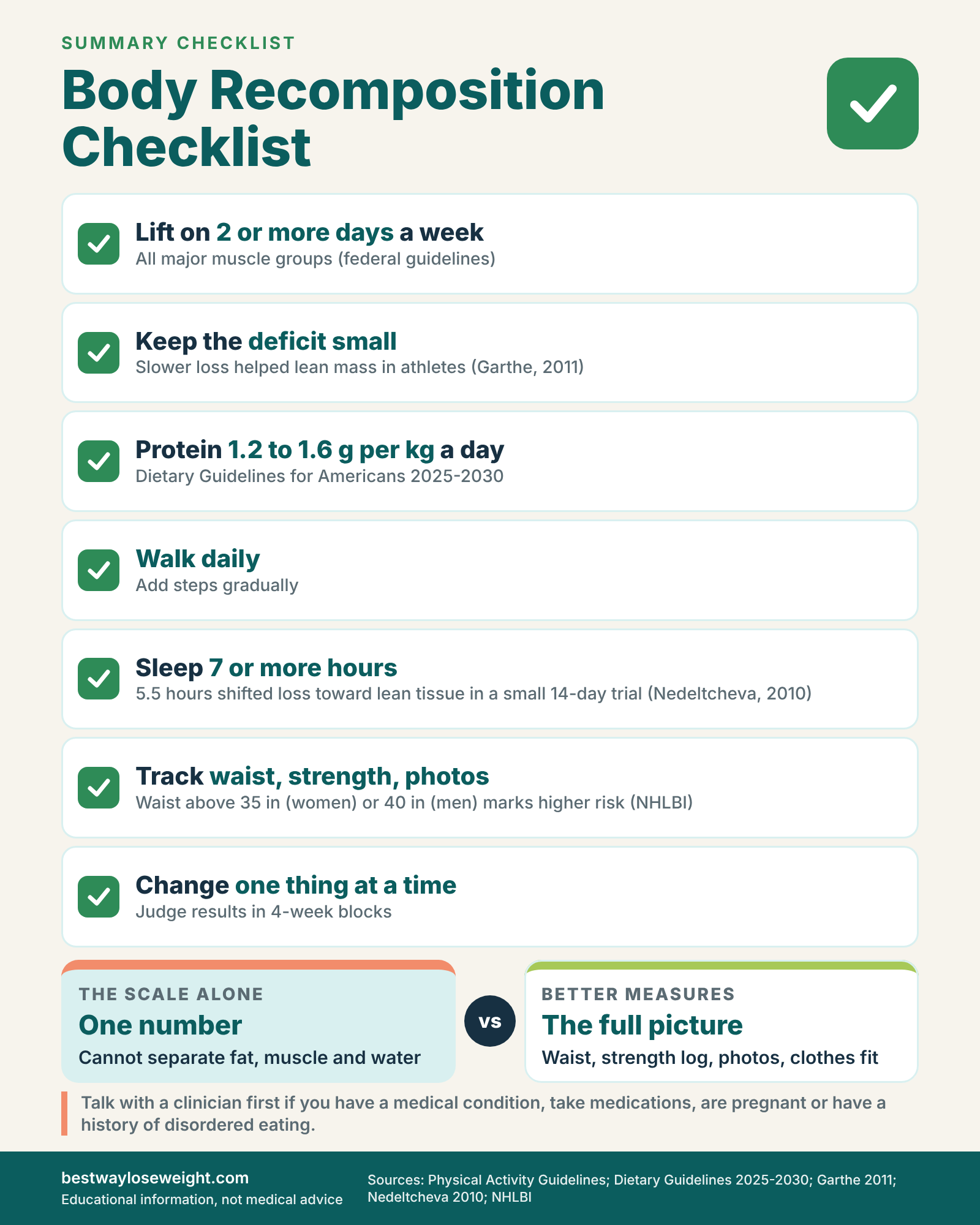
- Lift progressively two to four days a week and log every session.
- Eat at maintenance or a small deficit (about 10 to 15% below your estimated needs), not a crash diet.
- Aim for protein in the range of 1.2 to 1.6 grams per kilogram per day, spread across meals.
- Walk daily and hold your steps steady before adding more cardio.
- Protect sleep, aiming for 7 or more hours a night for most adults.
- Track waist, strength, photos and weekly weight averages, and change one thing at a time.
What results to expect
Results vary. Beginners, people returning to training and people with more body fat are the most likely to lose fat and gain muscle at once, and the change is gradual and often subtle on the scale. Lean, experienced lifters can still make progress but should expect a slower pace. Strength is your best early indicator. The bottom line: recomposition is a patient, repeatable routine and not a quick transformation. For the broader picture of safe weight loss, return to our guide on how to lose weight safely.
Editorial and medical-review note
About this article
This article is educational and does not replace individualized medical or nutrition advice. It was fact-checked against the sources listed below as of October 7, 2026, and is flagged for review by a qualified clinician before publication. Research findings are summarized from trials and reviews with specific populations and limits, and individual results vary.
Questions to bring to a clinician
- Are there conditions or medications that change how much protein, calories or exercise is appropriate for me?
- Which exercises should I modify or avoid given my joints, heart, bones or past injuries?
- What body-composition and health measures are worth tracking in my situation?
- If I use a weight-management medication, how should I adjust food and strength training?
Sources
Primary sources (government and clinical guidelines)
U.S. government and federal agencies
- U.S. Department of Health and Human Services. Physical Activity Guidelines for Americans, 2nd edition: Executive Summary (2018).
- Centers for Disease Control and Prevention. Physical Activity Guidelines for Adults.
- Centers for Disease Control and Prevention. About Sleep.
- Centers for Disease Control and Prevention. Steps for Losing Weight.
- National Heart, Lung, and Blood Institute. Assessing Your Weight and Health Risk.
- U.S. Department of Health and Human Services and U.S. Department of Agriculture. Dietary Guidelines for Americans, 2025-2030 (2026).
Professional societies and health systems
- American College of Sports Medicine. ACSM releases new position stand on resistance training (Medicine & Science in Sports & Exercise, April 2026).
- Australian Institute of Sport. Creatine supplement fact sheet.
- Cleveland Clinic. What to Know About Body Recomposition.
- Cleveland Clinic. The Difference Between Muscle Weight vs. Fat Weight.
- MSD Manual. Mifflin-St. Jeor Resting Energy Expenditure calculator.
Research and supporting literature
Controlled trials
- Longland TM, Oikawa SY, Mitchell CJ, Devries MC, Phillips SM. Higher compared with lower dietary protein during an energy deficit combined with intense exercise promotes greater lean mass gain and fat mass loss. Am J Clin Nutr. 2016. PubMed; McMaster record.
- Josse AR, Atkinson SA, Tarnopolsky MA, Phillips SM. Increased consumption of dairy foods and protein during diet- and exercise-induced weight loss promotes fat mass loss and lean mass gain in overweight and obese premenopausal women. J Nutr. 2011. Summary: ScienceDaily.
- Villareal DT, Aguirre L, Gurney AB, et al. Aerobic or resistance exercise, or both, in dieting obese older adults. N Engl J Med. 2017. PubMed; journal-club summary.
- Nedeltcheva AV, Kilkus JM, Imperial J, et al. Insufficient sleep undermines dietary efforts to reduce adiposity. Ann Intern Med. 2010. PubMed.
- Garthe I, Raastad T, Refsnes PE, Koivisto A, Sundgot-Borgen J. Effect of two different weight-loss rates on body composition and strength and power-related performance in elite athletes. Int J Sport Nutr Exerc Metab. 2011. Record.
Reviews and meta-analyses
- Barakat C, Pearson J, Escalante G, et al. Body recomposition: can trained individuals build muscle and lose fat at the same time? Strength Cond J. 2020;42(5):7-21. DOI.
- Murphy C, Koehler K. Energy deficiency impairs resistance training gains in lean mass but not strength: a meta-analysis and meta-regression. Scand J Med Sci Sports. 2022. Publication record; summary: Sci-Sport.
- Xie Y, Gu Y, Li Z, Zhang L, Hei Y. Comparing exercise modalities during caloric restriction: a systematic review and network meta-analysis on body composition. Front Nutr. 2025. Full text.
- Morton RW, Murphy KT, McKellar SR, et al. A systematic review, meta-analysis and meta-regression of the effect of protein supplementation on resistance training-induced gains in muscle mass and strength in healthy adults. Br J Sports Med. 2018. Abstract.
- Cava E, Yeat NC, Mittendorfer B. Preserving healthy muscle during weight loss. Adv Nutr. 2017. Full text.
- Helms ER, Aragon AA, Fitschen PJ. Evidence-based recommendations for natural bodybuilding contest preparation: nutrition and supplementation. J Int Soc Sports Nutr. 2014. Full text.
- Bonilla DA, et al. Editorial: New insights and advances in body recomposition. Front Nutr. 2024. Full text.
- Mifflin MD, St Jeor ST, Hill LA, et al. A new predictive equation for resting energy expenditure in healthy individuals. Am J Clin Nutr. 1990. PubMed.

